
As the year comes to a close, I find myself returning to a handful of expressions I’ve repeated for years—first as a college coach, then as a parent, and now as someone who works closely with families navigating recruitment and college decisions. These phrases aren’t things I say because they sound good; they’re lessons I’ve watched play out again and again, especially in the past year.
Trust the process
As a coach, I’ve always believed that the athletes who focus on the journey—on daily habits, growth, and consistency—are the ones who ultimately find success. This year, I watched that belief unfold in my own house.
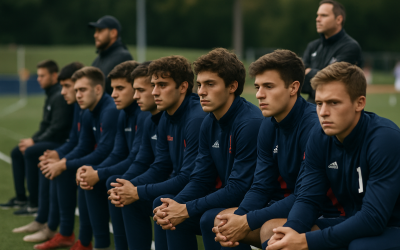
My high school–aged son found himself on a soccer team loaded with talent. For the first time in his life, he wasn’t a guaranteed starter. Instead of giving up or making excuses, he leaned into the same advice I’ve given countless athletes over the years: trust the process.
Every day, he went into the backyard to work on his touch. He started reading books like Atomic Habits, The Mind Gym, and Chop Wood Carry Water not because someone told him to, but because he wanted to understand how improvement really happens. He also became more intentional about his nutrition, recognizing that fueling his body was part of the work. While the minutes on the field didn’t come right away, he was empowered by focusing on the work in front of him.
When the team finally needed him in a big game, he was ready, and he didn’t just contribute—he made an immediate impact. His success in that moment was a result of committing to the process long before the outcome was clear.
It’s a marathon, not a sprint
Over the years, coaching has taught me to think long-term—to resist overreacting when things don’t go as planned. I watched that lesson play out again and again this year with the students and families I work with.
Several comprehensive students faced early action or early decision deferrals—or outright rejections—from their first-choice schools. Each felt that initial wave of panic. When those outcomes are playing out all over social media, staying patient becomes even harder. In a world conditioned for instantaneous gratification, anything short of immediate success can feel like failure.
But planning matters. We build balanced lists. We account for multiple outcomes. When I remind my students of that—and remind them that another round of decisions is just weeks away—they are able to breathe again. Just because something doesn’t happen immediately doesn’t mean it won’t happen at all.
The same is true in recruiting. Not every student-athlete’s timeline looks the same, despite how it can feel when splashy early commitment posts are everywhere. But recruiting isn’t a race. With a realistic, well-targeted list and appropriate exposure opportunities, the right coaches will take notice. Sometimes that recognition simply comes later.
The only two controllables are effort and attitude
If there’s one thing coaching has reinforced for me, it’s this: effort and attitude are the two constants. Everything else—roles, lineups, officiating, results—change.
That lesson showed up again through my other son, now in college. His freshman year didn’t look the way he imagined it might. Playing time was limited, and the adjustment was real. But he controlled what he could. He showed up every day with the right mindset, remained a supportive teammate, and took advantage of every opportunity to learn.
He also surrounded himself with the right people—teammates who held him accountable and didn’t let his attitude slip when things got hard. As a coach, I know how rare and valuable that kind of locker-room culture is.
When he came home for winter break, he ran into a friend of mine who asked how his season went. His answer was simple: “I didn’t get much playing time, but I learned a lot and got a lot better.” That kind of insight and growth doesn’t happen by accident. It happens when effort and attitude stay intact.
Struggles make you stronger
This may be the hardest lesson for families—but it’s one I’ve seen proven time and again.
When things get uncomfortable for a child, parents often feel the urge to intervene or make a change. In college, that can look like encouraging a transfer when academics get hard, friendships feel shaky, or playing time isn’t there. In high school or middle school, it can mean switching teams or coaches at the first sign of adversity, or taking a gap year when a first-choice college doesn’t admit their child.
But growth doesn’t come from avoiding struggle. It comes from learning how to navigate it. When parents step back and allow things to unfold, their children develop resilience, problem-solving skills, and confidence—and they emerge stronger because of it.